
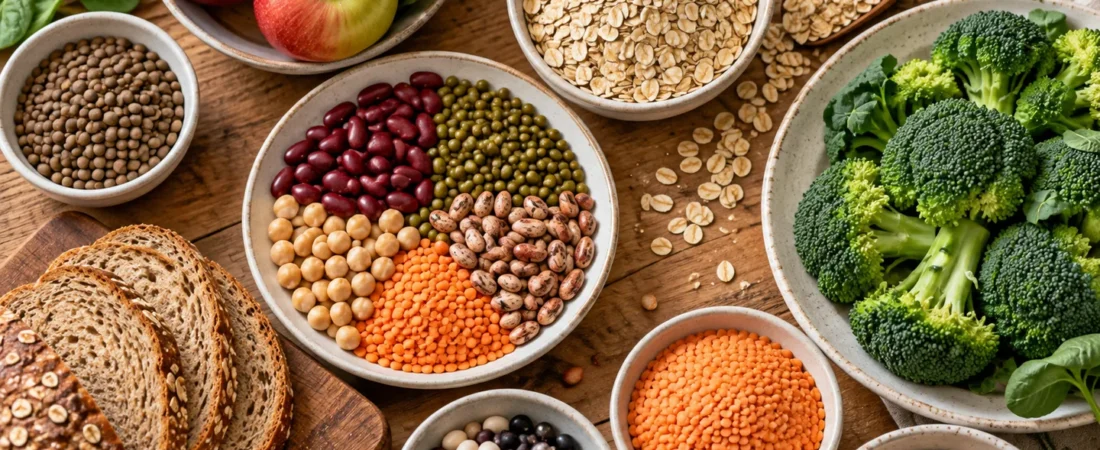
Adding more fiber can start with one familiar meal. Include a whole grain, a serving of beans or lentils, or fruit and vegetables you enjoy. Increase gradually rather than changing every meal at once, and consider fluids and your individual health needs as part of the plan.
Choose one meal to improve first
NIDDK lists whole grains, legumes, fruit, vegetables, and nuts as fiber sources. It recommends adding fiber gradually and drinking sufficient liquids to help it work. Its diet and nutrition guidance notes that needs vary and that a health professional can help plan an appropriate amount.
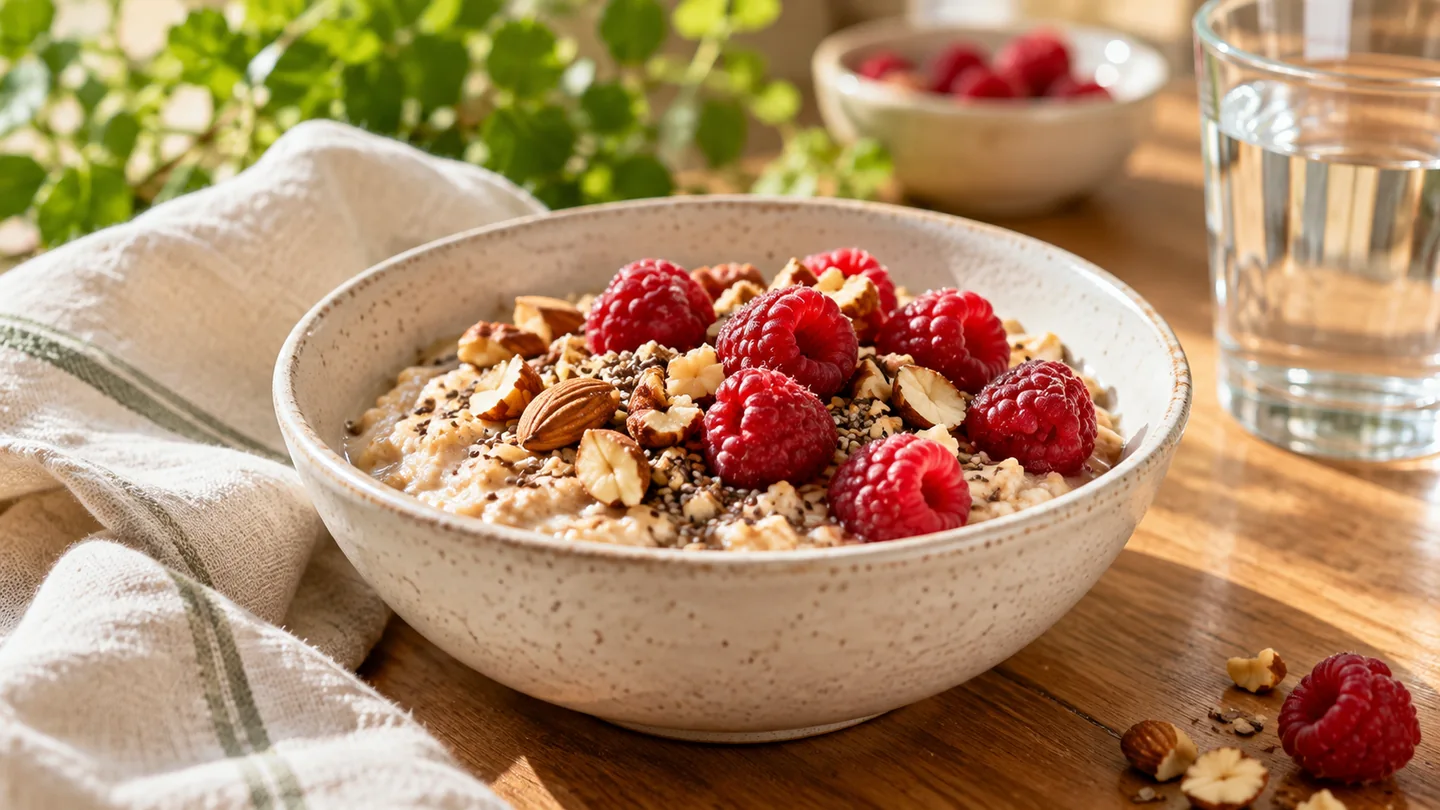
Start where the change is easiest. If you usually eat breakfast at home, try oats with fruit. If lunch is the most predictable meal, add beans to a familiar bowl or soup. If dinner is rushed, choose one vegetable you can keep ready to use. The goal is a repeatable option, not a perfect daily menu.
Use simple additions and swaps
| Meal or habit | Idea to adapt | Practical preparation |
|---|---|---|
| Breakfast | Oats with berries or chopped fruit | Keep oats and a fruit option available. |
| Lunch | Add beans or lentils to soup or a bowl | Prepare a portion alongside your usual meal. |
| Dinner | Include vegetables and a whole grain you enjoy | Choose an easy cooking method you already use. |
| Snack | Fruit or a suitable small portion of nuts | Account for allergies and personal dietary needs. |
| Sandwich | Try whole grain bread and a vegetable filling | Compare labels rather than choosing by package color. |
These examples are meal ideas, not a prescribed diet or a calculated nutrient plan. Portions, preparation methods, and the rest of your meals all affect the result.
Plan for a gradual change
Choose a single addition for several days before making another. This gives you a chance to notice how the change fits your appetite, schedule, and digestion. If an idea is inconvenient, simplify the preparation or use a different food from the same broad category.
Illustrative progression: first add fruit to a breakfast you already eat. Next, include a bean-based ingredient in one lunch. Later, experiment with a whole grain side at dinner. The pace should be adjusted to your needs; this is a planning example, not a clinical protocol.
Make grocery choices easier
Build a short list around the meals you actually intend to make. A realistic list might include oats, a fruit you enjoy, a legume you know how to prepare, and a vegetable that suits your schedule. Buying many unfamiliar ingredients at once can make the change harder to maintain.
When you use packaged foods, compare the listed fiber per serving and check the serving size. A package’s appearance is less useful than the information on its label. You can also record which convenient options you enjoyed so your next shop takes less effort.

Keep hydration and health needs in view
Do not apply a universal fluid target if you have been advised to restrict fluids. A clinician or registered dietitian can help you balance dietary changes with your health history. If you have an existing digestive condition or a prescribed diet, ask how to adapt these ideas rather than assuming that more is always better.
Persistent constipation, severe discomfort, or other ongoing symptoms should not be managed solely through a general wellness article. Seek advice about the cause and the appropriate plan. NIDDK’s guidance is educational background, not an individual diagnosis.
Does the plan require a fiber supplement?
This guide focuses on food. It does not rank fiber supplements or assume that one is needed. If you are considering a supplement, discuss the reason, formulation, and instructions with a qualified professional. Use the same careful label-reading approach you would use for any other ingredient.
Your next meal is the starting point
Select one addition that fits a meal you already enjoy. Put the ingredient on your shopping list, plan when you will prepare it, and see whether you want to repeat it. A manageable change can become part of a regular routine.
References
Educational information: This article does not provide a diagnosis, personalized treatment, or supplement prescription. Discuss relevant concerns with a qualified health professional. Do not stop prescribed medicines based on this content.